
A.F. Vandevorst SS 1999
girls in red crosses

+ The Antwerp-based designer duo behind A.F. Vandevorst, husband and wife Filip Arickx and An Vandevorst, emerged from the creative fog in 1998. Their first collection of Autumn/Winter 1998, a retrospective ode to the inspirations which had shaped their brand over the past 20 years, consisted of a dazzling frenzy of different references, from “Joseph Beuys, religion, horse-riding accouterments” to “rivets, lingerie, fetish shoes” and, of course, the signature blood red cross which has come epitomize the brand’s design ethos.
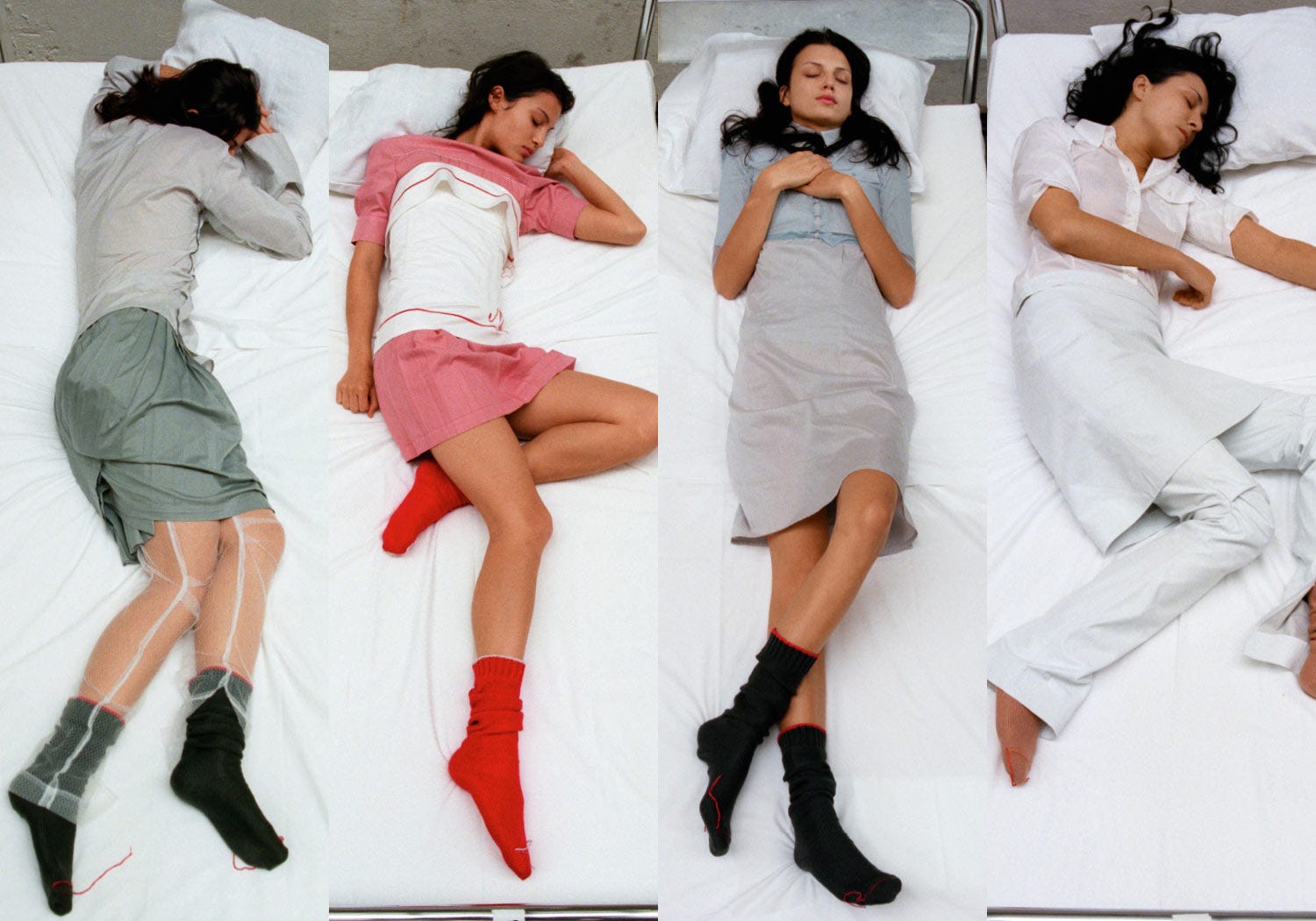
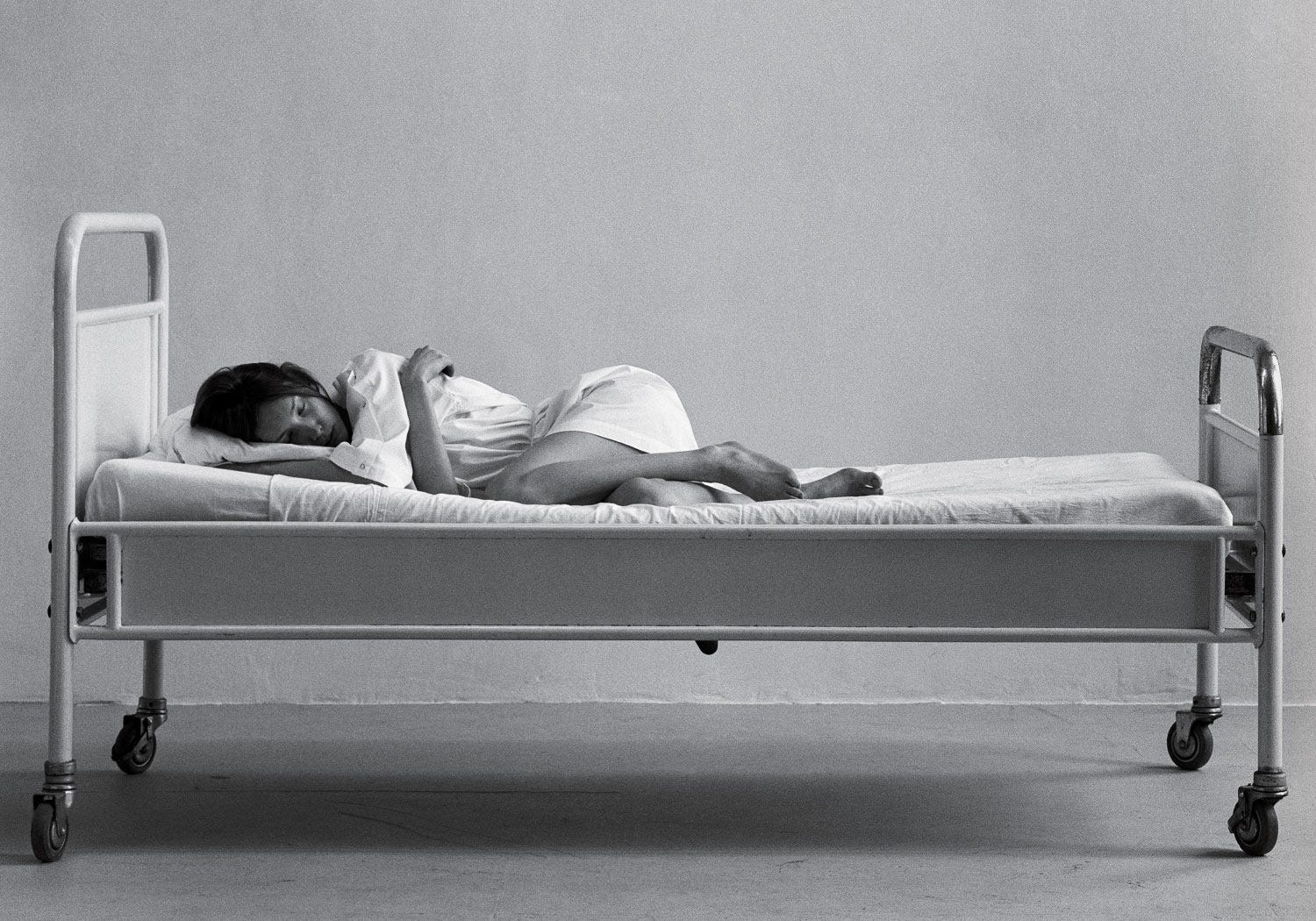
+ For their Spring/Summer 1999 collection, the duo erects a haunting installation: models line the perimeter of an old dormitory, their bodies curling languidly atop mid-century hospital beds. This season, the venue of a stark white warehouse is a place of transformation– a composite of tranquilizing respite imbued with a vulnerability and poetic nakedness only possible in the cold, sterile environments of hospitals; a setup which evokes images of Florence Nightingale-esc wartime infirmaries flooded with the pallid faces of wounded soldiers. And yet, despite this clinical environment, the models’ sleeplike states, instead of conjuring images of waxen death masks, convey a delicate fragility: a muted rejection of the traditional “in your face/music blaring/high energy-high decadence/bells and whistles” fashion show in favor of a strikingly modern and reserved performance.
PARIS, 13:25
One by one, models rose to life from their sickbeds at random to saunter between seated guests. To calculate this unpredictable display, A.F. Vandevorst stated: “every girl had a little light hidden in her hands that connected to a switchboard. Every time we wanted a girl to get up, the light would glow red in the palm of her hand.”
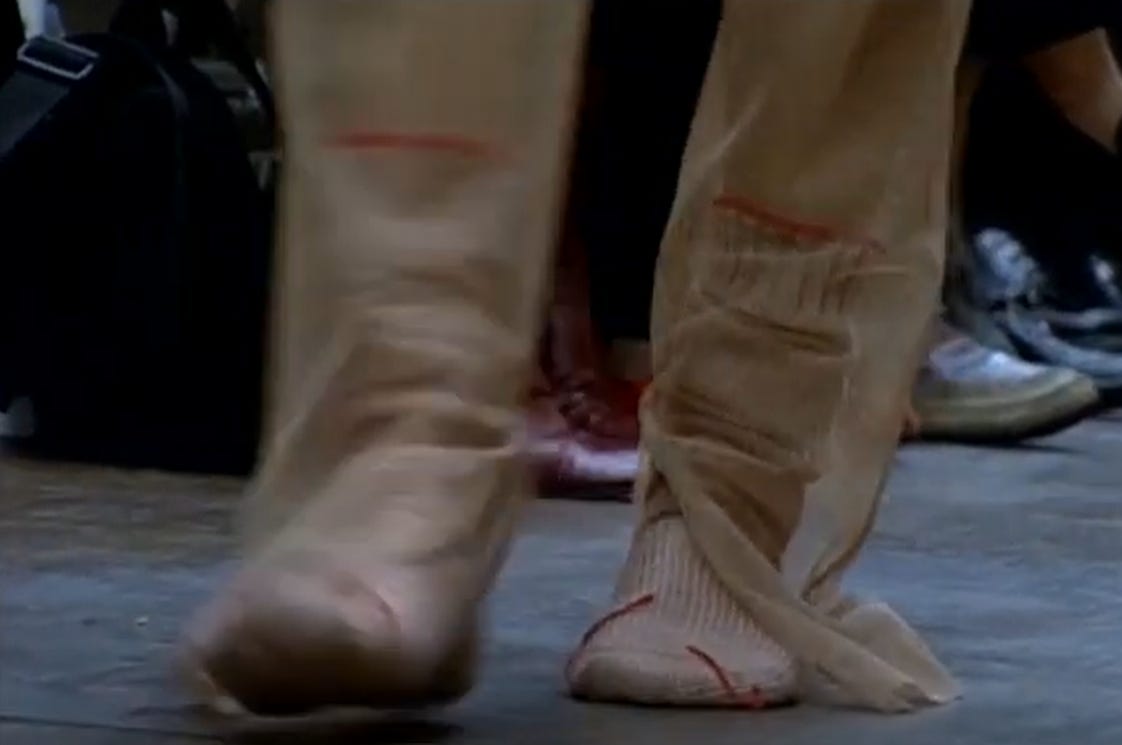
A.F. Vandevorst’s Spring/Summer 1999 show proved to be a brilliant step up from their debut collection last season. The idea for this collection was to create clothes that look like they’d been slept in– clothes that contained more soul, and spirit, by virtue of their being warped by sleep. Soft silks and satin wrapped the models, leaving no room for unnecessary frills. Layers of sheer hosiery hug models’ shoulders, mimicking clergy capes. Wrinkles are encouraged, not shunned. Each look is connected through the consistent use of whites and pale reds, nude hosiery, dainty neutrals, gingham, wrinkled pleats, button ups, and, lest we forget(!) the classic A.F. Vandevorstian red cross.
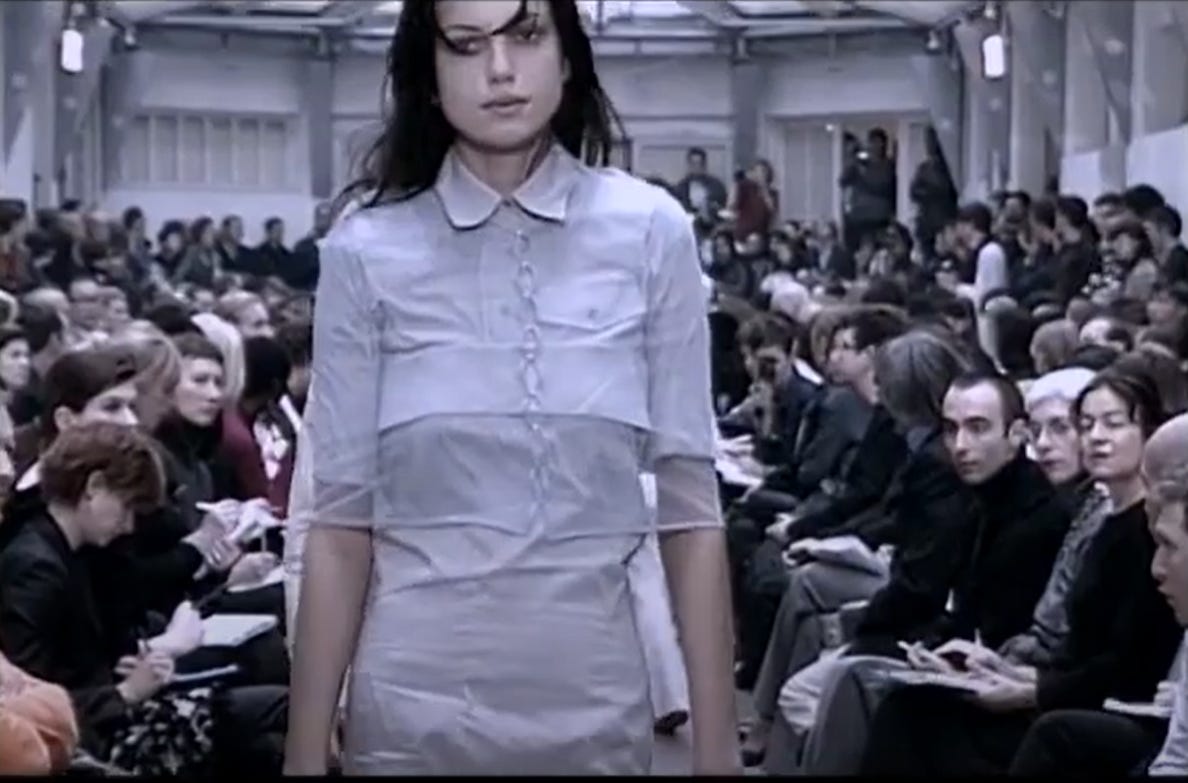
It’s important to note that this language of minimalism and deconstruction similarly pervaded the designs of A.F. Vandevorst’s Belgian contemporaries. The sartorial influences of Margiela, or Demuelemeester, were evident in this collection (you may also notice, if you watch the show on YouTube, a person who looks eerily similar to Walter van Beirendonck sitting front row in an orange shirt…is it him?!)
After all, it was at this time that the international “Belgian invasion” was in full swing, when the design sensibilities of Raf Simons and (generally speaking) the Antwerp 6 had bled into the popular zeitgeist, together with other designers who possessed similar minimalist aesthetics: Helmut Lang, Jil Sander, and Prada, of course. An Vandevorst herself was Dries Van Noten’s first assistant for six and a half years even before the conception of A.F. Vandevorst as a label. (To put into perspective the sheer acclaim these designers were getting in the early 90s, be aware that just two years prior to this A.F. Vandevorst collection, Margiela had already been appointed head designer at Hermes—an unforgettable stint in his career that I would love to talk about at another time—but an excellent example of how big luxury houses were already jumping to adopt these fresh, “anti-fashion” elements into their own design language.)
+ A.F. Vandevorst’s artful Belgian sensibilities and approach to design helped produce a collection whose fragile beauty still withstands the eternal flux of the fashion cycle. Long live A.F. Vandevorst’s show of tasteful restraint, and let learn from their continuous adherence to one-of-a-kind design.